

A new frontier for Indian turf: how the BCCI is fixing the domestic batting paradise
For years, the domestic cricket circuit in India was famous for producing run-gluttons. Young batters would accumulate massive double and triple centuries on flat, lifeless tracks that offered absolutely no assistance to fast bowlers. While these batting paradises boosted individual statistics and filled scorecards, they created a deceptive sense of security. When these same players traveled to the bouncy wickets of Australia or the swinging green tops of England, the stark contrast in playing conditions often exposed major technical flaws. Recognizing this critical gap in player development, the national cricket board has stepped in to fundamentally alter the nature of domestic pitches.
The historic curse of the road-like domestic track
Historically, local curators faced immense pressure to prepare pitches that lasted all five days of a first-class match. The result was often a dry, grassless surface affectionately termed a road, where bowlers had to toil for hours with little to show for their efforts. This approach severely stunted the growth of both disciplines. Seam bowlers became defensive, relying on error-free lines rather than attacking movement, while batters developed a technique that was highly vulnerable to the moving ball. To build a more resilient national team capable of winning in any corner of the world, a radical change in the domestic ecosystem was desperately needed.
Deciphering the new BCCI pitch preparation guidelines
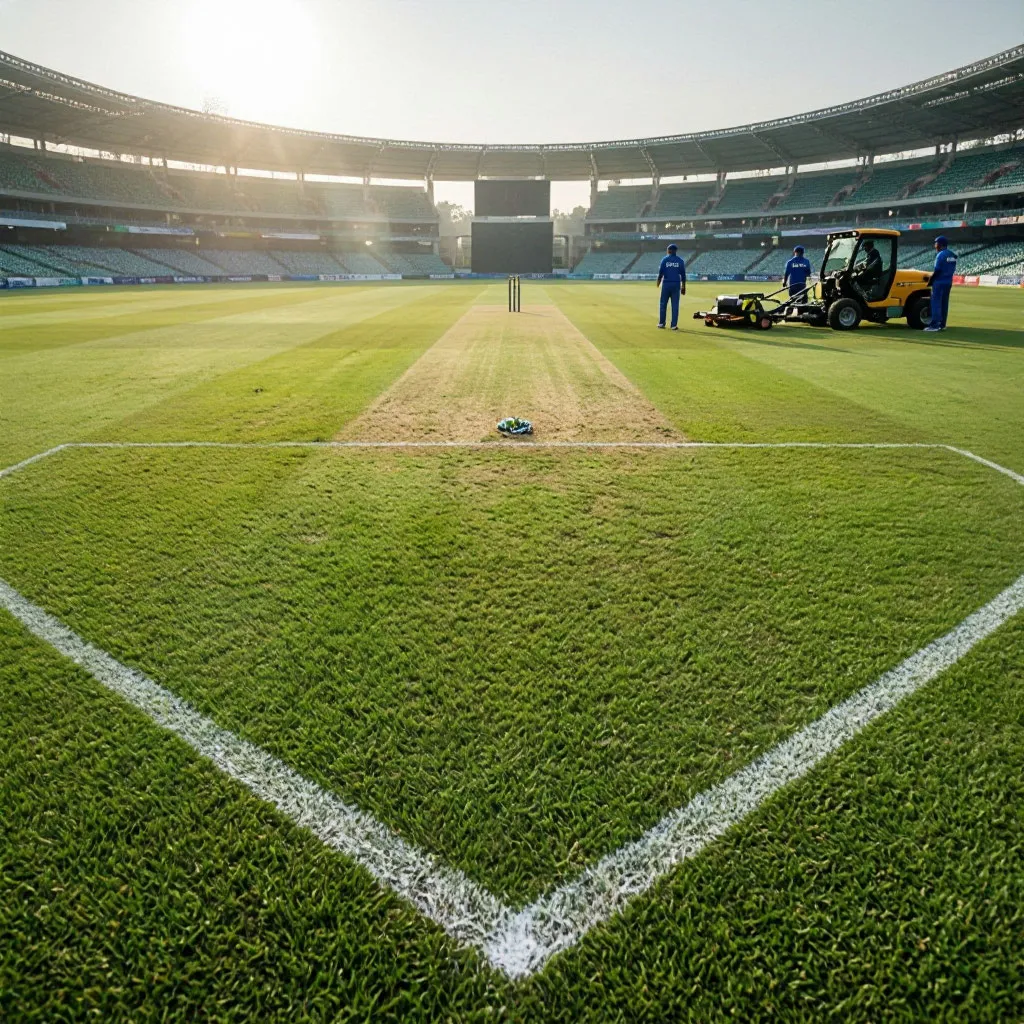
The governing body addressed this issue by introducing a revamped philosophy for ground staff across the country. The newly introduced BCCI pitch preparation guidelines mandate a shift away from dead tracks toward more sporting pitches that offer a fair contest between bat and ball. Curators are now encouraged to leave a healthy layer of live grass on the surface and use specific soil compositions to ensure consistent carry and bounce.
To standardise this shift across the vast geographical landscape of India, the board has distributed a strict set of instructions to local curators. These measures aim to eliminate dry, dusty surfaces and encourage dynamic contests between bat and ball:
- preservation of a live grass cover of at least four to eight millimeters to assist seam movement
- utilization of local clay mixtures with high active-clay content to guarantee optimal bounce
- reduction in the usage of heavy rollers to prevent the pitch from baking into an unbreakable concrete slab
- frequent watering schedules during the lead-up to matches to retain deep-seated moisture
- strict monitoring of soil density to prevent premature crumbling and excessive spin on day one
By enforcing these technological and agronomic changes, the administration hopes to create uniform bounce and lateral movement. This ensures that domestic matches mimic the hostile environments found in Brisbane, Leeds, or Cape Town, forcing players to adapt early in their careers.
Redefining the battleground: green top pitches in Indian domestic cricket
The introduction of green top pitches in Indian domestic cricket has already begun to change the tactical dynamics of the Ranji Trophy. Fast bowlers, who previously played a supporting role to spinners on dry pitches, are now spearheading bowling attacks with renewed confidence. They can swing the red cherry early in the morning and extract steep bounce even in the afternoon sessions. For batters, this change is a trial by fire. They can no longer rely on half-hearted forward presses; instead, they must learn to leave the ball on length and play close to their bodies to survive the testing opening spells.
Comparing old and new domestic pitch characteristics
The transformation of these playing surfaces represents a fundamental shift in the tactical demands placed on both domestic teams and ground curators. Evaluating the physical differences highlights how the playing environment is changing for the next generation of cricketers:
| Track attribute | Traditional flat pitches | New sporting pitches |
|---|---|---|
| Grass cover | virtually non-existent or dry and dead | active, green grass measuring up to eight millimeters |
| Soil compaction | extremely dense due to heavy rolling | moderate density to allow natural pace and carry |
| Primary bowling threat | finger spinners exploiting dry cracks | fast bowlers utilizing swing and seam movement |
| Average match duration | five days, often ending in high-scoring draws | three to four days with active, decisive results |
| Batting difficulty | low, favoring front-foot drives | high, requiring disciplined shot selection |
These adjustments mean that matches are highly unlikely to end in dull, high-scoring draws. Instead, teams must fight for every run, making domestic victories far more rewarding and representative of international standards.
Preparing the next generation for foreign soil
The ultimate goal of this pitch revolution is to enhance domestic cricket development India by producing players who are immediately ready for the rigors of Test cricket abroad. When Indian teams travel to the southern hemisphere or the United Kingdom, they often face a steep learning curve. By experiencing these challenging conditions at home, young prospects can develop the necessary muscle memory and mental resilience before they receive their international caps.
Adapting to these livelier surfaces requires a complete overhaul of traditional domestic batting and bowling techniques. Players who grew up playing on front-foot-dominant surfaces must now adjust their game in several key ways:
- Developing a strong back-foot play to handle the extra bounce and carry
- Mastering the art of leaving the ball outside the off-stump to avoid edge catches
- Bowling fuller lengths to let the seam and swing do the work on grass-covered tracks
- Improving slip-catching reflexes, as more edges carry to the cordon at a comfortable height
- Building the mental patience to grind out sessions when the ball is moving helper-softly
This tactical evolution is crucial for the long-term success of the national team. By mastering these adjustments at the domestic level, young talents will face fewer surprises when transitioning to the global arena.
Cultivating a more resilient sporting culture
By reforming Ranji Trophy pitch conditions, the board is investing in the long-term sustainability of the national team. While flat pitches might produce inflated individual averages, they do not build champions capable of conquering foreign soil. The transition to livelier, greener wickets ensures that the talent entering the national side is battle-tested and technically sound. As domestic teams embrace this challenging new era of turf preparation, the future of Indian cricket looks increasingly secure, promising a generation of players who are truly ready to conquer any pitch in the world.