

BCCI women’s domestic red-ball cricket: a new era of endurance
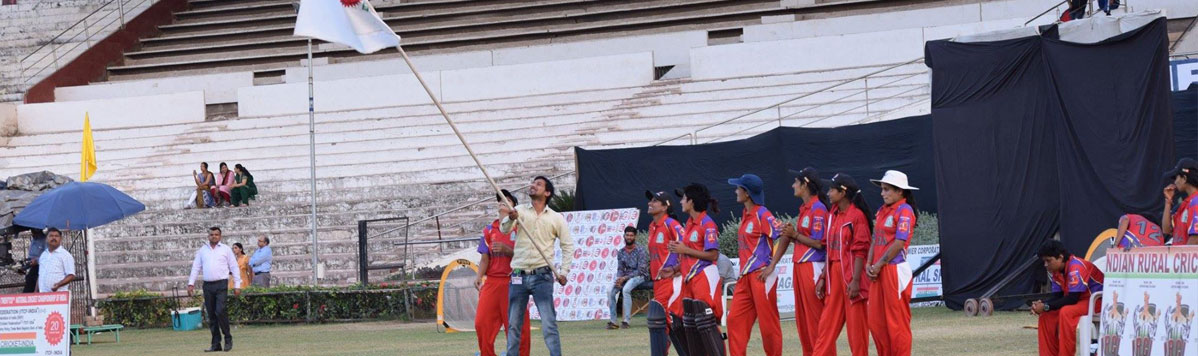
For years, the sound of women’s cricket in India was defined by the explosive crack of white leather under stadium floodlights. While the fast-paced nature of shorter formats brought money, viewership, and unprecedented fame, it left a noticeable void in the foundational skills of emerging players. Realizing this growing gap, the national board made the decisive move to reintroduce the multi-day format to the state-level calendar. This shift represents a quiet revolution, changing how young players learn the game and preparing them for the ultimate challenge of multi-day international matches.
The rebirth of endurance in the domestic arena
The revival of BCCI women’s domestic red-ball cricket marks a significant turning point for state teams that had spent nearly a decade playing exclusively limited-overs matches. In a competitive landscape dominated by immediate results and high-risk shotmaking, the longer game demands a completely different set of attributes. Young players who grew up idolizing aggressive boundary-hitters must now learn the art of leaving the ball outside the off-stump and building an innings over several sessions. By re-establishing this format, regional associations are providing the crucial developmental bridge that was missing for almost a generation of female athletes.
Rebuilding defensive techniques from the ground up
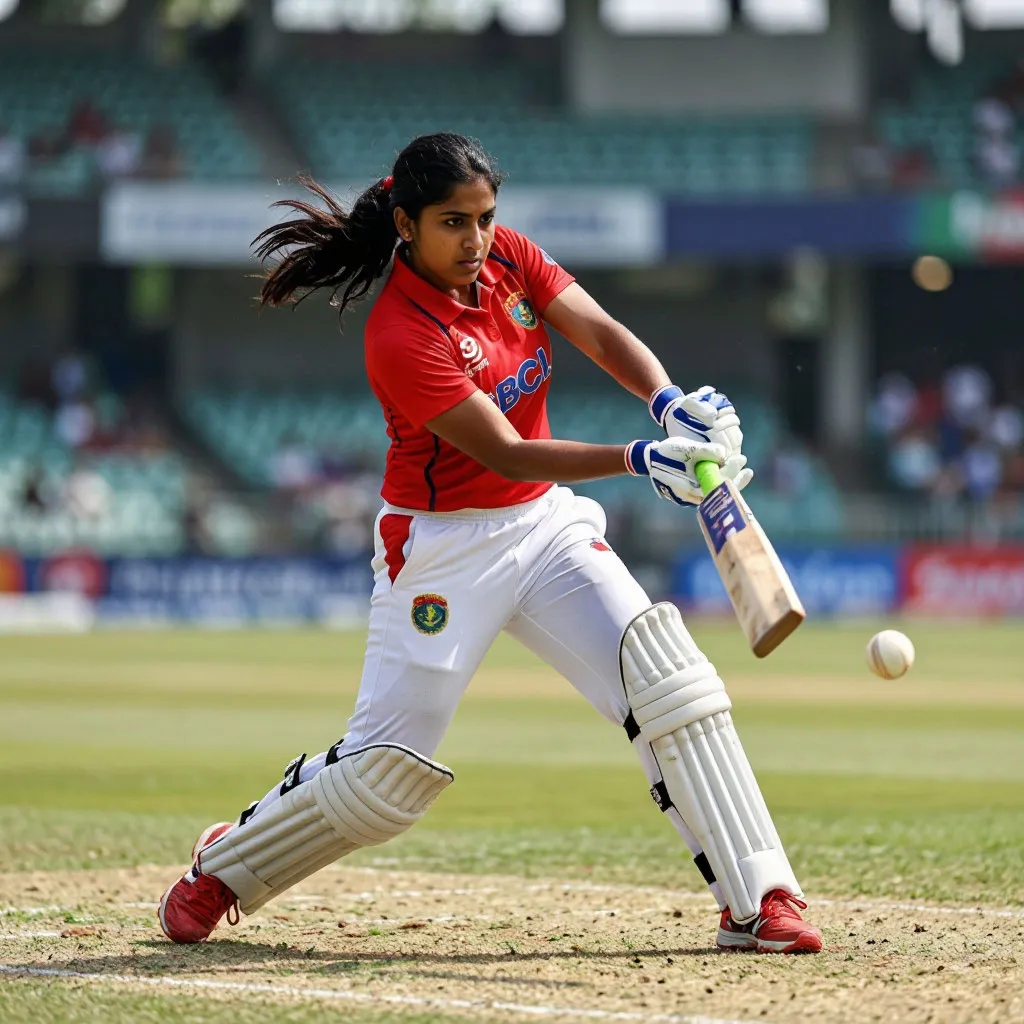
Transitioning from the frantic pace of T20s to the demanding sessions of a multi-day match requires a complete overhaul of a batter’s technical approach. Without the pressure of a rising run-rate, players are forced to confront their technical flaws, as bowlers can exploit a single weakness over several consecutive overs.
To survive on a wearing pitch against a red ball that swings and seams for longer periods, batters must develop specific technical adjustments:
- Soft hands defense: playing the ball directly under the eyes to prevent thick edges from carrying to the slip cordon.
- Off-stump awareness: learning to identify which deliveries to leave, preserving energy and frustrating the fielding side.
- Crease depth adjustment: moving deep inside the crease to counter late swing or stepping forward to smother spin.
These technical adaptations do not just help players survive in long-form matches; they also improve their consistency in limited-overs formats. When a player understands how to defend securely under pressure, her shot selection in shorter formats becomes much more precise and less prone to panic.
Forging the endurance of modern bowlers
For bowlers, the physical demand of red-ball cricket is a complete departure from the brief four-over spells of shorter formats. In a multi-day environment, a bowler must remain effective across multiple spells throughout a single day. This challenge tests not only their physical stamina but also their tactical intelligence. Instead of using variations to prevent boundaries, bowlers must learn how to set up batters over several overs, slowly building pressure through consistent lines and lengths until the batter makes a mistake.
Aligning domestic structures with global test matches
This renewed focus on stamina and technical discipline is directly tied to India’s international ambitions. Organizing a women’s multi day tournament India has allowed selectors to evaluate players under conditions that closely mimic the physical and mental pressures of international Test matches.
The structural differences between domestic multi-day cricket and white-ball formats reveal why this transition is so critical for player development:
| Performance metric | Domestic red-ball matches | One-day matches | T20 franchise matches |
|---|---|---|---|
| Minimum overs per day | 90 overs | 50 overs per innings | 20 overs per innings |
| Primary ball characteristics | Pronounced seam, holds swing | Harder finish, loses swing quickly | Softens quickly, minimal swing |
| Core batting objective | Occupation of the crease | Steady accumulation | Instantaneous run-rate acceleration |
| Bowler workload target | 15 to 25 overs per day | Maximum of 10 overs | Maximum of 4 overs |
By looking at these contrasting requirements, it becomes clear why relying solely on white-ball tournaments created a developmental gap. The newly structured multi-day format forces players to push past their physical comfort zones, ensuring that when they earn a national call-up, they are already accustomed to the grinding workloads of the highest level.
Cultivating the ultimate mental endurance
Beyond the physical and technical adjustments, the psychological shift required for multi-day play is perhaps the hardest challenge for the modern generation. Long hours in the field under a hot sun require a level of focus that cannot be taught in short training sessions.
The domestic cricket development BCCI program has focused heavily on building this mental resilience by teaching young athletes to manage their cognitive energy over several days:
- Session-by-session planning: breaking the day into three distinct parts to maintain peak focus without burning out.
- Active recovery on the field: finding moments between deliveries and during over changes to relax the mind.
- Patience under pressure: accepting quiet periods of play without forcing low-risk options that lead to soft dismissals.
Learning to navigate these quiet, grinding phases of a match builds a psychological toughness that is invaluable in any format. Players who can maintain their concentration through a grueling six-hour day in the field are far less likely to lose their composure during the chaotic final overs of a limited-overs match.
The path to international readiness
This renewed domestic pipeline is already showing its value in Indian women’s test cricket preparation. As the national team gears up for prestigious bilateral series against traditional red-ball powerhouses, selectors no longer have to guess who can handle the longer format. The players coming through the domestic multi-day system are entering the international arena with their techniques refined, their physical endurance tested, and their minds prepared for the long grind. This structural upgrade ensures that India’s future in the longest format of the game is built on a foundation of genuine red-ball expertise rather than sheer adaptation.