


How India Dominates the T20I Series Against Sri Lanka: Performance Analysis of the Women’s National Team
In recent years, the India women’s cricket team has established clear superiority over Sri Lanka in the T20I format. What once were competitive encounters have increasingly turned into controlled performances dominated by India’s depth, tactical awareness, and individual brilliance. This dominance is not accidental; it is the result of long-term planning, investment in domestic cricket, and a clear understanding of modern T20 dynamics.
This article provides a deep analytical breakdown of how India continues to outperform Sri Lanka in women’s T20 internationals. By examining batting patterns, bowling efficiency, squad depth, tactical flexibility, and psychological factors, we can better understand why the balance of power in this rivalry has shifted so decisively. The focus remains on performance trends, not isolated matches, offering a complete and SEO-optimized view of India’s sustained success.
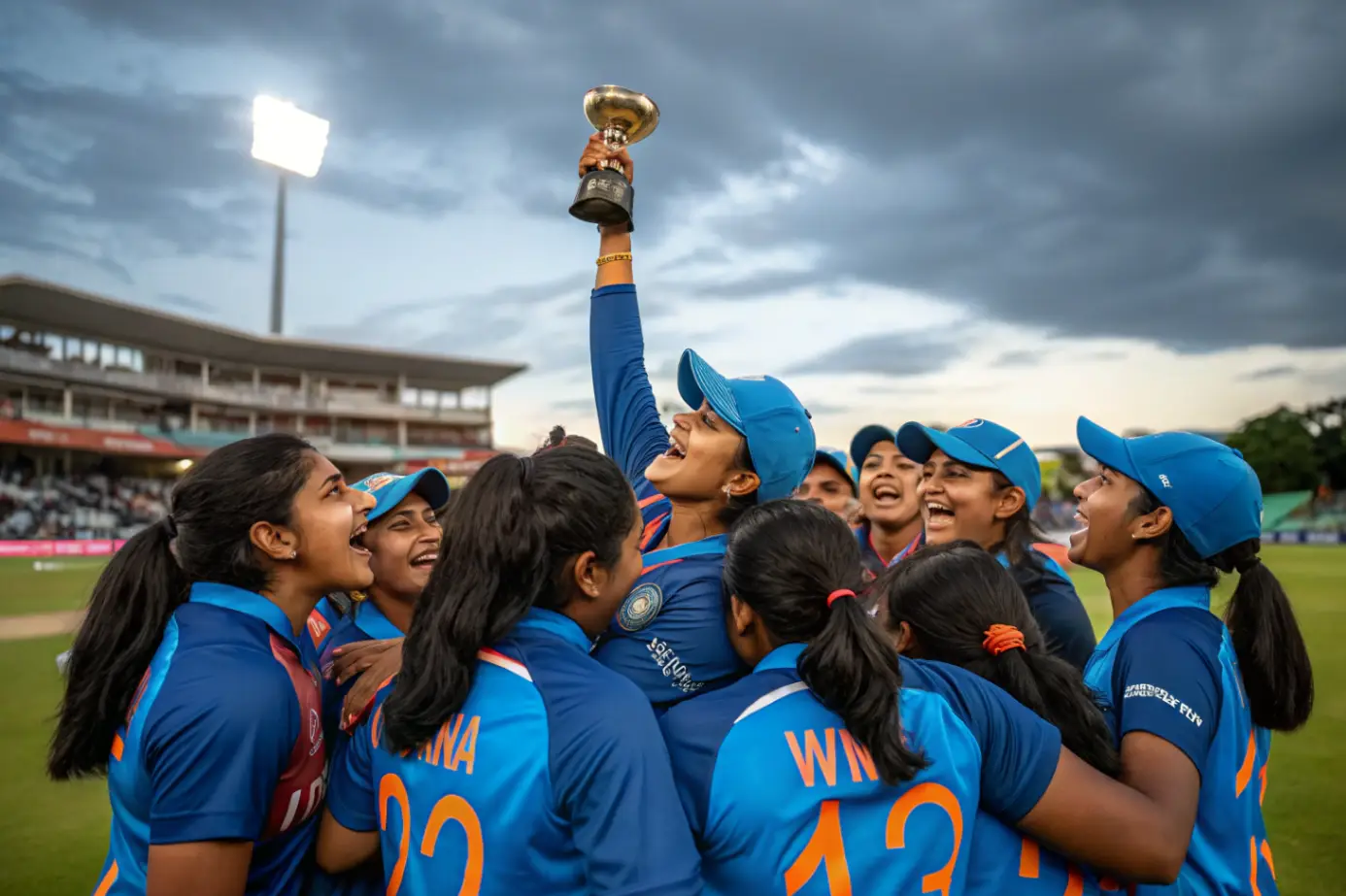
Overall Performance Trends in Women’s T20I Encounters
When analyzing the India vs Sri Lanka women’s T20I rivalry, the most striking feature is consistency. India rarely relies on a single standout performance; instead, victories are built on repeated execution of fundamentals across multiple matches and series. This consistency is reflected in higher average team scores, superior run rates, and disciplined bowling spells that limit Sri Lanka’s scoring opportunities.
India’s top-order stability has been a defining factor. Opening partnerships often provide a solid foundation, allowing the middle order to play with freedom rather than pressure. Sri Lanka, by contrast, frequently struggles to recover after early wickets, which disrupts momentum and forces conservative batting in a format that rewards aggression.
Fielding standards further separate the two teams. India’s athleticism in the field regularly converts half-chances into wickets, while tight inner-circle fielding cuts off easy singles. Over time, this creates scoreboard pressure that Sri Lanka has found difficult to overcome. These cumulative advantages explain why India not only wins matches but often controls them from start to finish.
Statistical Breakdown of India’s Dominance
To understand the scale of India’s control in women’s T20I matches against Sri Lanka, it is important to examine key performance metrics. Numbers highlight patterns that are not always obvious during live play, particularly when it comes to efficiency rather than raw talent.
Below is a statistical overview that illustrates India’s superiority across multiple dimensions of the game. Before examining the table, it is worth noting that these metrics reflect trends across several T20I series rather than isolated encounters, providing a reliable performance snapshot.
| Performance Metric | India Women (T20I) | Sri Lanka Women (T20I) |
|---|---|---|
| Average Team Score | 155–165 | 115–125 |
| Powerplay Run Rate | 7.8–8.5 | 5.6–6.2 |
| Wickets Lost per Innings | 5–6 | 7–8 |
| Economy Rate (Bowling) | 5.6–6.2 | 7.4–8.1 |
| Boundary Percentage | High | Moderate |
| Death Overs Run Control | Strong | Inconsistent |
These figures show more than just numerical superiority. India’s ability to score quickly in the powerplay while preserving wickets allows them to dictate match tempo. Their bowlers, meanwhile, maintain control during critical phases, especially at the death. Sri Lanka’s higher economy rates and frequent middle-over collapses explain why they often fall behind early and struggle to recover. The statistical gap reinforces the visual dominance seen on the field.
Batting Strength and Tactical Flexibility
India’s batting approach in women’s T20I cricket is built around adaptability rather than rigidity. Instead of relying on one fixed template, Indian batters adjust their strategy based on pitch conditions, opposition bowling, and match context. This tactical flexibility has been a major reason for their dominance against Sri Lanka.
Before diving deeper, it is useful to outline the key batting principles that define India’s success in this format. These elements work together to create a balanced and resilient lineup rather than isolated moments of brilliance:
- Strong opening partnerships that prioritize strike rotation alongside boundary hitting.
- A technically sound middle order capable of stabilizing innings after early wickets.
- Finishers who specialize in accelerating during the final overs.
- A high percentage of boundaries without excessive risk-taking.
- Clear role definition for each batter in the lineup.
These principles translate into consistent pressure on Sri Lanka’s bowling attack. When openers score freely, fielding restrictions are exploited. If early wickets fall, the middle order absorbs pressure without slowing the run rate significantly. This balance prevents Sri Lanka from gaining control at any stage of the innings. The result is not just higher totals but innings that feel structured and purposeful, making Indian batting particularly difficult to contain.
Bowling Depth and Match Control
While India’s batting often attracts headlines, their bowling unit is equally responsible for sustained success in women’s T20I matches against Sri Lanka. The Indian attack combines variety with discipline, ensuring that batters are constantly challenged with changes in pace, angle, and length.
Indian bowlers excel at executing plans rather than relying on raw speed or spin alone. Powerplay overs are used to apply early pressure, often forcing false shots through tight lines outside off stump. During the middle overs, spinners play a central role by controlling run flow rather than chasing wickets recklessly. This strategy frustrates Sri Lankan batters, who are forced to take risks against well-set fields.
At the death, India’s bowlers demonstrate superior yorker accuracy and slower-ball variations. This ability to close out innings efficiently prevents late surges, a critical advantage in T20 cricket. Sri Lanka’s lower finishing strike rates reflect how effectively India denies easy runs in the final overs. Over time, this bowling discipline has become one of the most reliable pillars of India’s dominance.
Fielding Standards and Athletic Advantage
Another key factor in India’s dominance is the clear gap in fielding quality between the two sides. Modern women’s T20I cricket places enormous value on athleticism, and India has embraced this reality more effectively than Sri Lanka.
Indian fielders consistently save runs through sharp anticipation and quick release throws. Singles that might be routine against other teams are often denied, increasing scoreboard pressure. Catching efficiency is also notably higher, particularly in high-pressure moments. Missed chances are rare, and this reliability builds confidence within the bowling unit.
Sri Lanka, while improving, still struggles with consistency in the field. Misfields and dropped catches not only concede runs but also extend partnerships, allowing Indian batters to settle. Over a short format, these small moments accumulate into decisive advantages. India’s superior fielding therefore acts as a multiplier, enhancing the effectiveness of both their batting totals and bowling plans.
Mental Strength and Game Awareness
Beyond technical skills, India’s dominance in women’s T20I cricket against Sri Lanka is rooted in psychological resilience and game awareness. Indian players display a strong understanding of match situations, which allows them to remain calm under pressure.
This mental strength is evident in close chases, where India rarely panics despite required run rates climbing. Batters trust their skills and maintain composure, while bowlers stick to their plans even after conceding boundaries. Leadership within the team reinforces this mindset, ensuring that tactical clarity remains intact throughout the match.
Sri Lanka, on the other hand, has occasionally shown signs of uncertainty in high-pressure scenarios. Sudden collapses or loss of bowling discipline often coincide with moments of stress. India’s ability to exploit these phases without remembering past mistakes highlights their superior cricketing maturity. Over multiple series, this mental edge has translated into consistent results.
Future Outlook of the Rivalry
Looking ahead, the India vs Sri Lanka women’s T20I rivalry is likely to continue evolving. Sri Lanka has made visible strides in player development and tactical planning, suggesting that future contests may become more competitive. However, India’s structural advantages remain significant.
India’s domestic pipeline continues to produce versatile cricketers equipped for the demands of T20 cricket. Exposure to high-pressure leagues and international tournaments further accelerates development. Unless Sri Lanka closes the gap in depth, fitness, and tactical flexibility, India is expected to maintain its upper hand.
The rivalry therefore serves as a benchmark rather than a balanced contest at present. For Sri Lanka, competing with India offers valuable learning opportunities. For India, these series provide a platform to refine strategies and test emerging players without compromising performance standards.
Conclusion
India’s dominance over Sri Lanka in women’s T20I cricket is the result of a complete and well-integrated system. Strong batting foundations, disciplined bowling, elite fielding, and mental resilience combine to create a team that consistently outperforms its opponent. Rather than relying on individual brilliance alone, India wins through structure, planning, and execution.
As women’s cricket continues to grow globally, this rivalry highlights the importance of long-term investment and adaptability. India’s approach offers a blueprint for sustained success in the T20I format, while Sri Lanka’s challenges underline the areas that require focused development. For now, the competitive balance remains firmly tilted in India’s favor.
Recent Posts
- India’s fast bowling workload management: how BCCI uses sports science to protect next-gen speedsters
- Syed Mushtaq Ali Trophy as the ultimate IPL audition: how domestic T20 stats drive auction bids
- BCCI women’s domestic red-ball cricket: a new era of endurance
- WPL auction strategy: why multi-dimensional all-rounders demand the highest price tags
- DRS for wides and no-balls in WPL: how technology is eliminating margins of error in T20