

Scandals and sensations in Indian cricket 2026: news everyone discussed
Indian cricket in 2026 did not lack runs, rivalries or packed stadiums, but the year was remembered just as much for the noise around the game. The biggest stories were not always about a last-over finish or a young batter announcing himself on the main stage. Many of them came from dressing rooms, boardrooms, hotel corridors, disciplinary hearings and social media storms that turned a normal cricket season into a rolling public debate.
The Indian Premier League again stood at the centre of attention. That was not surprising: no other cricket tournament combines so much money, pressure, celebrity culture and national emotion in one place. Yet the controversies of 2026 felt sharper because they touched different layers of the sport at once. There were questions about player discipline, franchise behaviour, anti-corruption rules, public image, selection politics, senior-player futures and the growing difficulty of controlling a tournament that has become bigger than a simple sporting event.
What made the season especially intense was the speed at which every incident grew. A gesture on the field became a national argument within minutes. A dressing-room mistake turned into a debate about professionalism. A board warning to franchises was read as proof that the league’s private spaces were becoming harder to manage. For fans, it was dramatic. For administrators, it was a warning. For players, it was a reminder that modern Indian cricket allows almost no private error.
The ipl discipline storm
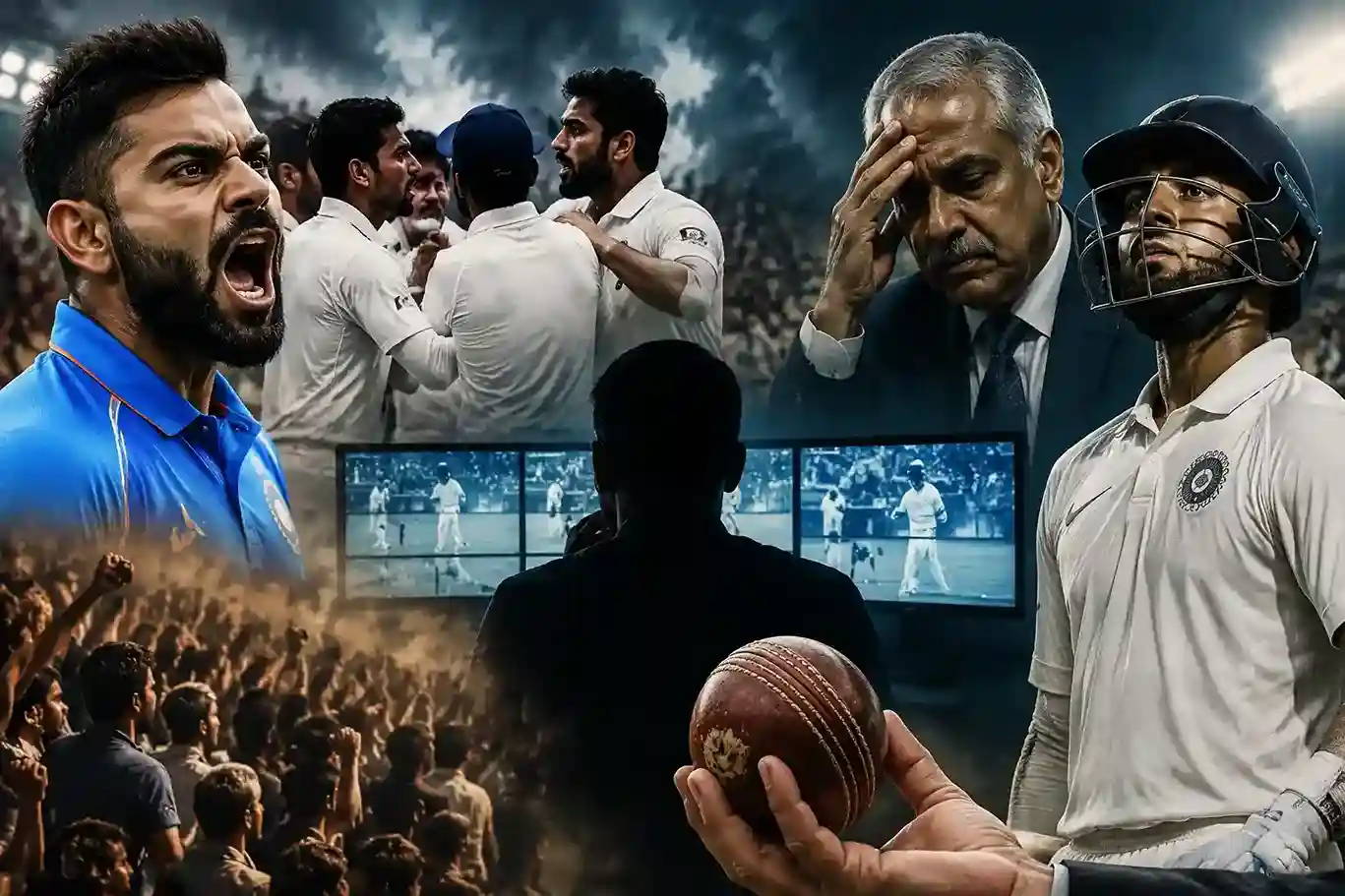
The most discussed theme of Indian cricket in 2026 was discipline. IPL seasons have always had heated exchanges, fines and emotional reactions, but the 2026 campaign created the impression of a tournament testing the limits of its own control. Code of Conduct breaches were no longer isolated footnotes after matches. They became part of the season’s story.
The issue was not only that players were being fined. The deeper concern was that the image of the tournament was being dragged into uncomfortable territory. In a league followed by millions every night, small acts of frustration can appear larger than they really are. A gesture, an argument with an official or a failure to follow match protocol can overshadow the actual cricket.
Tim David’s disciplinary trouble became one of the clearest examples. A strong, explosive batter is usually judged by his ability to change games in a few overs, but in 2026 his name also entered discussions around demerit points and acceptable conduct. When a player moves close to suspension territory, the matter is no longer just a private warning. It affects team planning, dressing-room mood and the public reading of a franchise’s culture.
The broader pattern mattered more than any single name. Coaches, support staff and players were all under sharper scrutiny. Umpires and match referees were no longer seen only as technical officials; they became part of the public conversation about respect and authority. The BCCI’s reaction showed that the league did not want indiscipline to become part of its brand identity.
This was the key tension of IPL 2026: the tournament sells emotion, aggression and high-pressure entertainment, but it also needs boundaries. Fans love passion until it starts looking like chaos. Franchises encourage players to be expressive, yet they also expect them to protect the team’s reputation. That balance became harder to maintain as the season moved forward.
The disciplinary storm also showed how modern cricket has changed. Earlier, many small incidents would have stayed inside the match report. Now they are clipped, replayed, debated and judged by millions of people who may not know the full situation. The result is a harsher public court, where players are punished officially and then punished again by online opinion.
Dressing-room mistakes and franchise image
Riyan Parag’s vaping controversy became one of the most talked-about moments of the season because it did not fit the usual shape of a cricket scandal. It was not a fight, a selection leak or a match-fixing allegation. It was a visual moment from a private team space that quickly became public and forced people to ask what kind of behaviour should be acceptable inside a professional dressing room.
The reaction was strong because Parag was not just another squad player. As Rajasthan Royals captain, he represented the franchise on and off the field. Captaincy brings a different standard. A captain’s mistake is rarely treated as an individual lapse; it becomes a reflection of team culture, leadership and internal discipline.
The incident also exposed a grey area in cricket’s rulebook. Some behaviour is clearly covered by anti-corruption codes, anti-discrimination rules or on-field conduct regulations. Other behaviour sits in a less defined zone, where administrators must decide whether the issue is legal, ethical, disciplinary or reputational. That uncertainty made the debate louder.
For Rajasthan, the matter was awkward because it came during a season when every franchise was already being watched closely. Public explanations from team figures could calm part of the reaction, but they could not erase the basic problem: the dressing room is no longer a fully protected space. Cameras, broadcasts, social media and public hunger for controversy have made even off-field moments part of the cricket product.
The Parag case also spoke to a wider issue in Indian cricket. Young players now become stars faster than any previous generation. They receive contracts, captaincy roles, brand attention and public judgment while still learning how to carry themselves under pressure. Talent can take a player into the spotlight, but maturity decides how long he survives there.
That does not mean one mistake should define a cricketer. It does mean that IPL leadership now demands more than tactical decisions and batting form. Captains must understand optics, sponsors, fan perception and the weight of representing a franchise worth hundreds of millions. The modern cricket captain is part athlete, part public figure and part brand guardian.
Bcci warnings and the fight for control
The BCCI’s stronger tone toward franchises was one of the defining signals of 2026. When the board begins warning teams about conduct, hotel access, owner behaviour and possible risks around players being compromised, it suggests that the problem is bigger than a few heated exchanges on the field.
The IPL has become a giant travelling ecosystem. Players, owners, coaches, analysts, agents, commercial partners, media teams and guests move through hotels, stadiums and training facilities for weeks. That creates excitement, but it also creates vulnerability. The more people who enter restricted spaces, the harder it becomes to protect players from unwanted influence, leaks or reputational traps.
The BCCI’s concern about unauthorised visitors and restricted access was not just about discipline. It was about risk management. Indian cricket still carries the memory of past corruption scandals, and the IPL’s credibility depends on constant vigilance. Even the appearance of weak control can damage public trust.
This is why the 2026 warnings felt serious. They were not written as casual reminders. They showed that the board wanted franchises to understand the stakes. A successful league cannot rely only on big crowds and television numbers. It also needs confidence that matches are clean, players are protected and team areas are professionally managed.
Several issues stood out during the season because they touched the same larger concern:
• Unauthorised movement around team areas created questions about who had access to players and why.
• Mobile-phone use near restricted zones raised anti-corruption concerns, even when there was no proven wrongdoing.
• Owner and staff behaviour during live matches brought attention to the boundary between support and interference.
• Warnings about targeted approaches reminded teams that high-profile athletes can become vulnerable off the field.
• Smart devices, including advanced eyewear, forced administrators to think about technology that did not exist when older rules were written.
These points show why the BCCI’s job has become more complex. Cricket administration is no longer only about fixtures, selection and stadium arrangements. It now involves security culture, digital devices, behavioural rules, commercial pressure and crisis communication.
The surprise-check approach made sense because rules are only effective when teams believe they will be enforced. A franchise may accept written guidelines, but real compliance depends on everyday habits. Who enters a hotel room? Who stands near the dugout? Who carries a device? Who talks to players during a match? These small questions became part of a much larger battle for control.
The mustafizur rahman row and cricket diplomacy
One of the most sensitive controversies linked to Indian cricket in 2026 involved Mustafizur Rahman and Bangladesh’s reaction to the BCCI’s decision around his IPL participation. The story moved beyond sport because it involved national emotion, broadcast decisions and the complicated relationship between cricket boards, governments and public sentiment.
For fans, the issue was simple on the surface: a major overseas player became unavailable, and the consequences were immediate. For administrators, it was much more delicate. IPL franchises build squads through auctions, contracts and tactical planning. When a player is removed or released because of board-level instructions, it affects team balance and raises questions about how much control a franchise truly has.
Bangladesh’s move to ban IPL broadcasts in response showed how quickly cricket can become a diplomatic pressure point. The IPL is not just an Indian domestic product. It is watched across South Asia, followed by overseas fans and financially connected to multiple markets. A decision made in India can create anger elsewhere, especially when national pride becomes involved.
This controversy reminded everyone that Indian cricket’s power brings responsibility. The BCCI is the most influential cricket board in the world, and IPL decisions are rarely seen as small internal matters. Other countries, broadcasters, players and fans read them politically, commercially and emotionally.
The Mustafizur episode also raised a difficult question about player agency. Cricketers often sit between boards, leagues and national expectations. A player may want to fulfil a contract, a franchise may want him available, and a board may have reasons to intervene. When those interests clash, the player can become the face of a dispute he does not fully control.
The story was sensational because it had every ingredient that drives public debate: a famous league, an international player, a strong government reaction and a sense that cricket had become bigger than cricket. It also showed that the IPL’s global reach can create problems as well as opportunities.
Senior stars, selection pressure and public emotion
Not every sensation in Indian cricket 2026 came from disciplinary action. Some of the loudest conversations surrounded the future of senior stars, especially when the discussion turned toward long-term planning for the 2027 ODI World Cup. In India, selection is never just selection. It is emotion, loyalty, memory and fear of moving on too early.
Virat Kohli and Rohit Sharma remained central to public debate because their careers carry enormous symbolic weight. Every injury update, every form dip, every expert comment and every rest decision invited interpretation. Fans did not simply ask whether a player was available for one series. They asked what it meant for the next World Cup, the next leadership cycle and the identity of Indian cricket after its golden generation.
The tension around senior players was understandable. India has a deep talent pool, but replacing icons is never clean. Younger players need opportunities, yet established names still bring experience, commercial value and psychological authority. Selectors must think about the future without disrespecting the past.
This emotional pressure can turn normal cricket decisions into public drama. If a veteran misses a series, rumours begin. If a younger batter is picked, people ask whether a transition has started. If a former selector or commentator speaks strongly, the quote becomes a headline. In 2026, that cycle was especially active because India’s white-ball planning felt like it was entering a decisive stage.
The reported friction between coaching leadership and senior players also added fuel to the conversation. Even when reports are vague, fans read them through old rivalries, personality differences and memories of past dressing-room politics. Indian cricket has always had strong characters. The difference now is that every hint of disagreement becomes part of a national debate.
The real issue was not whether one senior player would survive one more tournament. The bigger question was how India could manage transition without creating unnecessary instability. A successful team needs renewal, but it also needs emotional intelligence. Moving too slowly can block young talent. Moving too fast can break continuity and alienate supporters.
That is why the senior-star debate became one of the year’s major sensations. It was not a scandal in the traditional sense, but it carried the same intensity. It touched pride, legacy, performance and the fear that an era might be nearing its final stretch.
Technology, anti-corruption and the new cricket battlefield
The debate over smart devices and anti-corruption controls gave IPL 2026 a distinctly modern flavour. Cricket has always worried about illegal approaches, inside information and suspicious communication. What changed in 2026 was the technology around those risks. Phones were no longer the only concern. Smart eyewear, connected devices and hidden communication tools forced authorities to think ahead.
The BCCI’s anti-corruption unit warning about smart goggles was important because it showed how quickly sporting rules must adapt. A device that looks harmless in everyday life can be dangerous in a restricted sporting environment. It may record, transmit or receive information. Even when no wrongdoing is proven, the possibility is enough to create concern.
This matters because cricket is built on trust. Fans must believe that team decisions are sporting decisions, that information is protected and that no one has unfair access to sensitive details. Once that trust weakens, every strange moment on the field can become suspicious.
The 2026 season brought together several controversies that, while different in detail, pointed toward the same future problem: the line between ordinary technology and risky technology is getting thinner. A phone near the dugout, a smart device in a team area, an unauthorised visitor in a hotel room and a warning about targeted approaches may look like separate stories. Together, they show the new battlefield of cricket integrity.
The main controversies of the year can be understood more clearly when placed side by side, because each one touched a different weakness in the modern game.
| Controversy | Main issue | Why it mattered |
|---|---|---|
| IPL Code of Conduct breaches | Player and staff discipline | Raised questions about behaviour, respect for officials and the league’s public image |
| Riyan Parag vaping incident | Dressing-room conduct | Showed how private team spaces can quickly become public scandals |
| BCCI warnings to franchises | Access, security and protocol | Suggested concern about weak control around players and team environments |
| Mustafizur Rahman row | Board power and international reaction | Turned an IPL decision into a wider South Asian cricket dispute |
| Smart-device restrictions | Anti-corruption protection | Highlighted new risks created by wearable and connected technology |
| Senior-player selection debate | Transition and legacy | Showed how emotional India’s planning for the next World Cup remains |
The table shows that Indian cricket’s biggest 2026 stories were not random bursts of drama. They were connected by pressure. The league is bigger, the money is bigger, the technology is sharper and the public reaction is faster. Indian cricket is still powerful, but power now comes with more visible cracks.
The anti-corruption angle also explains why administrators sometimes react firmly even when fans feel the punishment is excessive. A cricket board cannot wait for a major scandal before acting. Its job is to prevent suspicious conditions from forming in the first place. That is why restrictions can appear strict: they are designed to close doors before someone tries to walk through them.
What these scandals reveal about indian cricket
The scandals and sensations of 2026 revealed an uncomfortable truth: Indian cricket is no longer judged only by what happens between bat and ball. The sport has become an entertainment industry, a political symbol, a commercial machine and a daily social media drama. Every part of it is watched.
That does not make Indian cricket weaker. In many ways, it shows how important it has become. People argue about the IPL because they care. They debate selection because they feel attached to players. They react strongly to discipline problems because the league’s image matters to them. Silence would be a bigger warning than noise.
Still, the year made one thing clear. The BCCI and franchises cannot rely on reputation alone. They need sharper internal systems, clearer rules and more consistent messaging. Players need guidance, not only punishment. Young captains need support in handling fame. Senior stars need honest communication about their roles. Teams need to treat restricted areas as professional zones, not flexible social spaces.
The IPL’s greatest strength is also its greatest risk. It is glamorous, emotional and constantly visible. That visibility brings money and influence, but it also magnifies mistakes. A domestic league in another country might survive a dressing-room lapse with limited attention. In India, the same incident becomes national conversation.
The future of Indian cricket will depend on how well it absorbs the lessons of 2026. Stronger anti-corruption controls should not make the game feel paranoid. Better discipline should not remove passion. Transition planning should not become disrespectful to legends. Public accountability should not turn every mistake into a career-defining scandal.
The best version of Indian cricket is intense but not reckless, emotional but not chaotic, commercially powerful but still credible. The controversies of 2026 were uncomfortable, but they also gave the sport a chance to correct itself before deeper damage appeared.
Cricket fans will remember the year for its drama, but the more important memory may be administrative. The season forced Indian cricket to look at its own machinery: who controls access, who sets behavioural standards, who protects players, who explains decisions and who takes responsibility when the spectacle becomes too loud.
That is why 2026 felt like more than a collection of scandals. It felt like a stress test. Indian cricket passed parts of it, failed parts of it and learned that the modern game leaves very little room for casual mistakes. The runs and wickets will always matter, but the sport’s reputation is now decided in many more places: the dressing room, the hotel, the dugout, the board office and the screen in every fan’s hand.