


Financial impact of the Women Premier League on career stability for uncapped domestic players in India
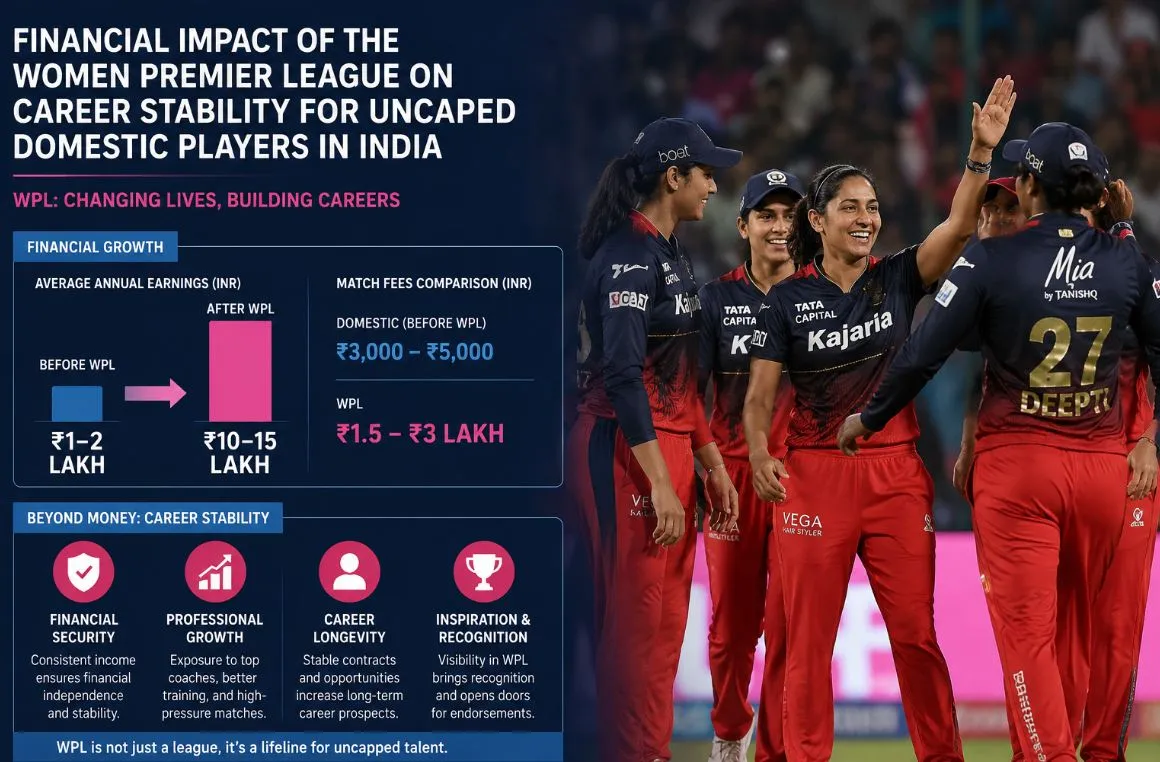
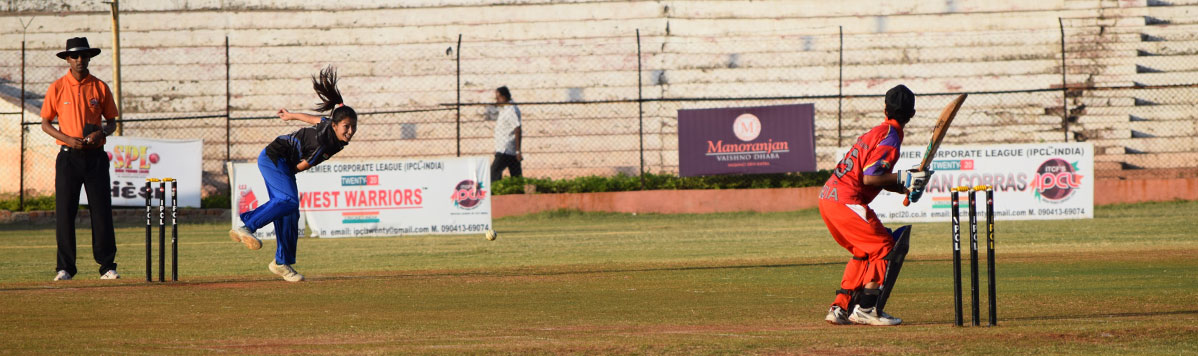
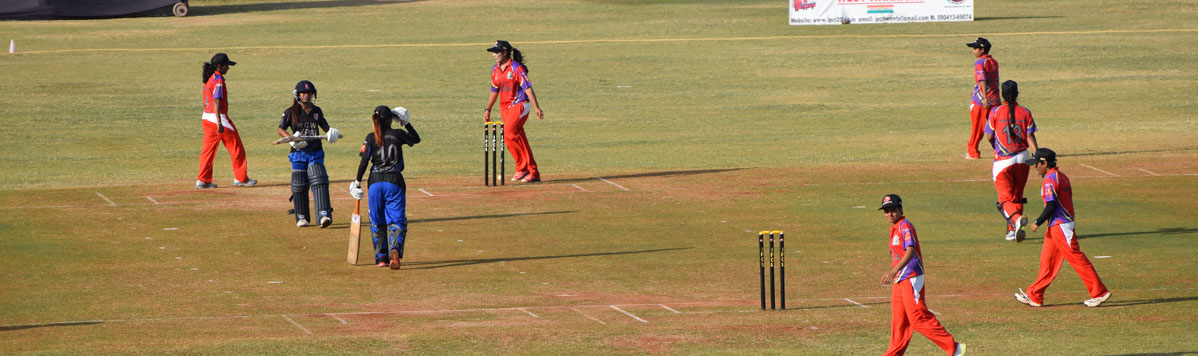
The launch of franchise-based T20 leagues has historically altered the global sports landscape, but few tournaments have catalyzed a social and economic shift as profound as the Women’s Premier League (WPL) in India. For decades, female cricketers playing at the state level operated under a system of semi-professionalism: juggling demanding training schedules with daily wage employment or railways department jobs. The sudden influx of corporate investment and broadcasting rights has paved a highly lucrative path for players who have yet to represent the national team. By securing significant contracts, these individuals can finally transition into full-time professional athletes, fundamentally altering the trajectory of their sporting careers.
Redefining the financial landscape of domestic cricket
The sheer scale of the auction bids has established a new benchmark for domestic women cricket financial growth, particularly for young women who previously operated in obscurity. Before the league’s inception, a domestic cricketer’s livelihood depended entirely on match fees from senior one-day and T20 tournaments, which offered modest compensation and lacked long-term security. Today, even the base price bids at the franchise auctions represent a massive financial leap that secures a player’s commitment to the sport.
The creation of a specialized financial ecosystem has introduced vital mechanisms that support uncapped players wpl during their crucial developmental years. This newly found financial backing manifests in several distinct areas of a player’s career:
- direct funding for high-performance training: players can now afford personal coaching, specialized batting consultants, and off-season training facilities.
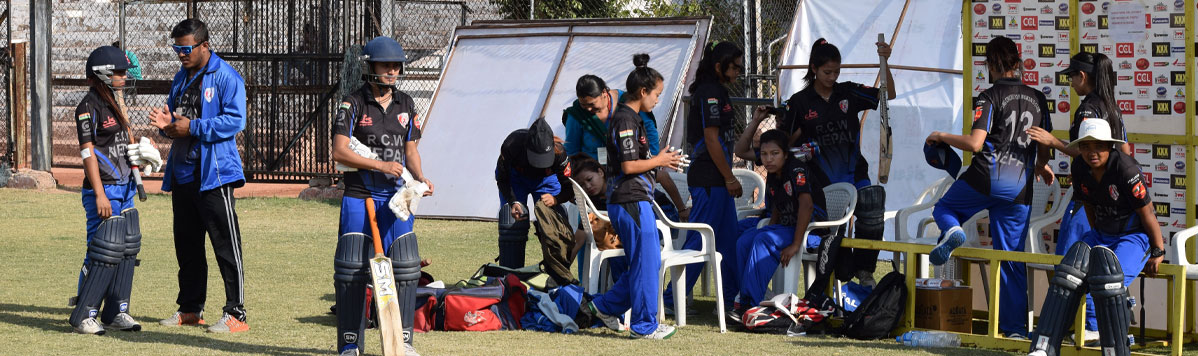
- access to premium sports gear: high-quality English willow bats, customized protective equipment, and specialized footwear are no longer out of reach.
- independent living arrangements: athletes can relocate to major sporting hubs with better cricketing infrastructure without relying on parental assistance.
- long-term financial planning: early-career wealth allows young cricketers to secure insurance, invest in property, and plan for life after active play.
These changes have effectively dismantled the traditional barriers that forced many talented sportswomen to retire prematurely. The ability to reinvest capital back into their own athletic development has created a self-sustaining cycle of talent production that benefits the entire national cricketing pipeline.
Salary comparisons between domestic matches and franchise contracts
To truly appreciate the transformative nature of this tournament, one must analyze the stark contrast between the traditional domestic pay structure and the financial windfalls of the franchise system. While the national board has made commendable strides in upgrading match fees for domestic fixtures, those earnings are still contingent on selection and are distributed over a short playing season. Franchise contracts, conversely, offer a guaranteed sum that provides a solid financial foundation for the entire calendar year.
The following comparison illustrates the dramatic disparity between standard domestic earnings and the various contract tiers available to uncapped athletes in the franchise tournament.
| Playing level / Contract tier | Estimated annual earnings (INR) | Primary source of income | Contract duration / Stability |
|---|---|---|---|
| Senior domestic match fee | 2,50,000 – 4,00,000 | Match play days | seasonal: depends on active team selection |
| WPL base price tier | 10,00,000 | Franchise contract | annual: guaranteed for the season |
| WPL mid-range uncapped tier | 30,00,000 – 50,00,000 | Auction bid | annual: with potential for retention |
| WPL premium uncapped tier | 60,00,000+ | Competitive bidding | annual: high-value franchise asset |
The comparative data highlights that even a minimum-tier women premier league salary dwarfs the maximum possible earnings from a full season of standard domestic multi-day and limited-overs matches. This financial disparity has altered player psychology: cricketers no longer view domestic matches as their final destination, but rather as a proving ground to catch the eyes of franchise scouts.
How financial security translates into performance on the field
The psychological relief of financial independence has an immediate, positive impact on an athlete’s on-field performance. When a player is not preoccupied with immediate survival or finding a secondary job to support her family, she can approach her training with absolute focus. The intense pressure of the tournament becomes a platform for growth rather than a source of anxiety, leading to a higher quality of cricket overall.
With secure backing, players can approach their professional development with structured, multi-year goals in mind. This strategic shift in focus is typically executed through several critical steps:
- Establishing a year-round nutritional plan: hiring personal nutritionists to design customized meal plans that optimize muscle recovery and stamina.
- Partnering with professional trainers: employing certified strength and conditioning coaches to build customized off-season fitness regimens.
- Investing in mental conditioning: working with sports psychologists to manage the intense scrutiny and pressure of playing in televised franchise matches.
- Focusing on physical rehabilitation: accessing advanced physiotherapy and injury prevention programs that extend athletic longevity.
This comprehensive approach to career management ensures that players maintain peak physical condition throughout the year. The transition from survival mode to high-performance optimization has elevated the overall standard of the domestic circuit, creating a highly competitive environment.
Ultimately, the rise of the franchise system has built an indispensable bridge between raw talent and elite execution. By providing unparalleled career stability to athletes who have yet to wear the national colors, the league has ensured that the future of the sport is both secure and incredibly bright. As domestic women cricket financial growth continues to accelerate, the dream of playing professional sports is no longer a privilege reserved for a select few, but a viable, highly rewarding career path for young girls across the nation.